THE FAN
It is perspective
The rays are nearly parallel from cloud to ground. They seem to meet at the sun for the same reason a long straight road seems to meet at the horizon.
See the numbers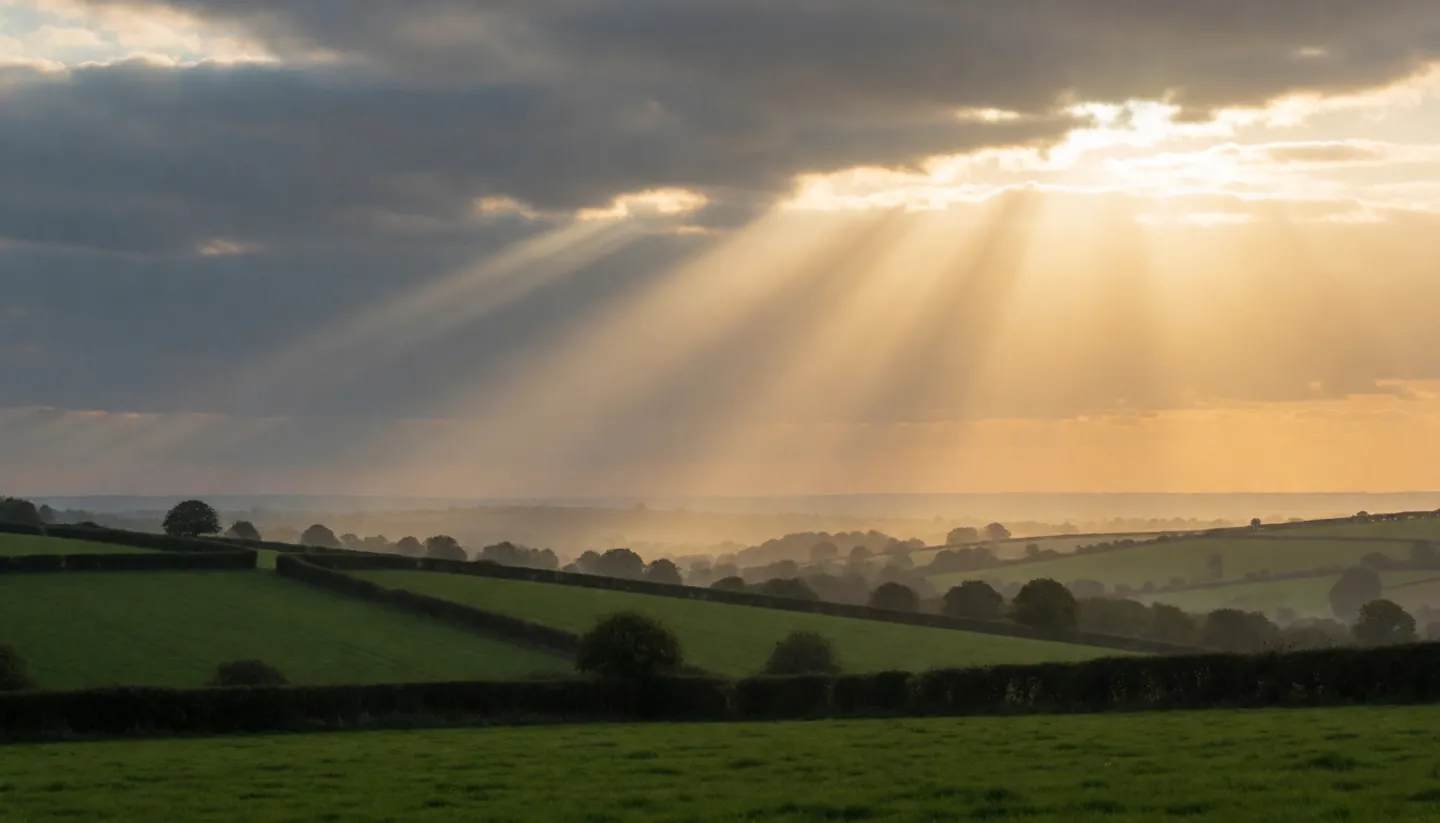
 doodlerayz
SKY OPTICS IN PLAIN ENGLISH
RAYS shadow and haze
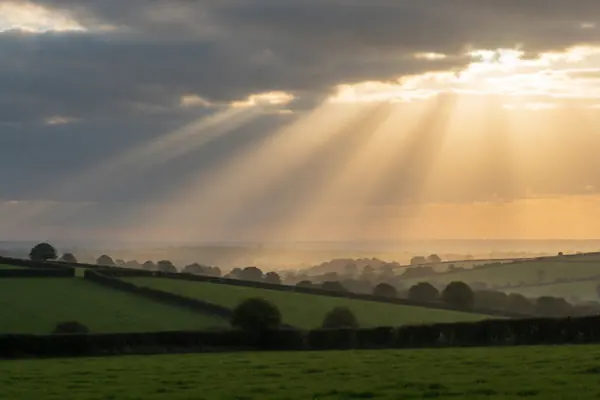
Sunbeams through a gap in the clouds seem to spread like a fan.
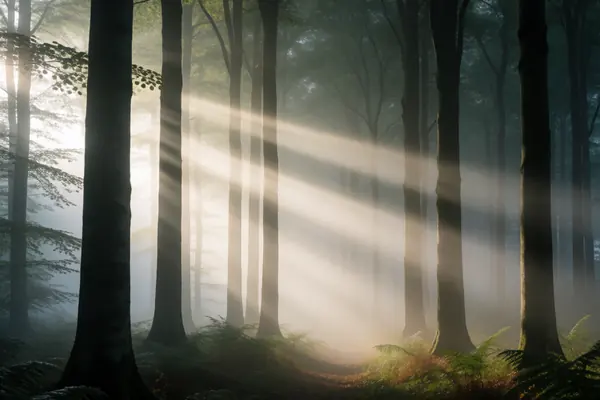
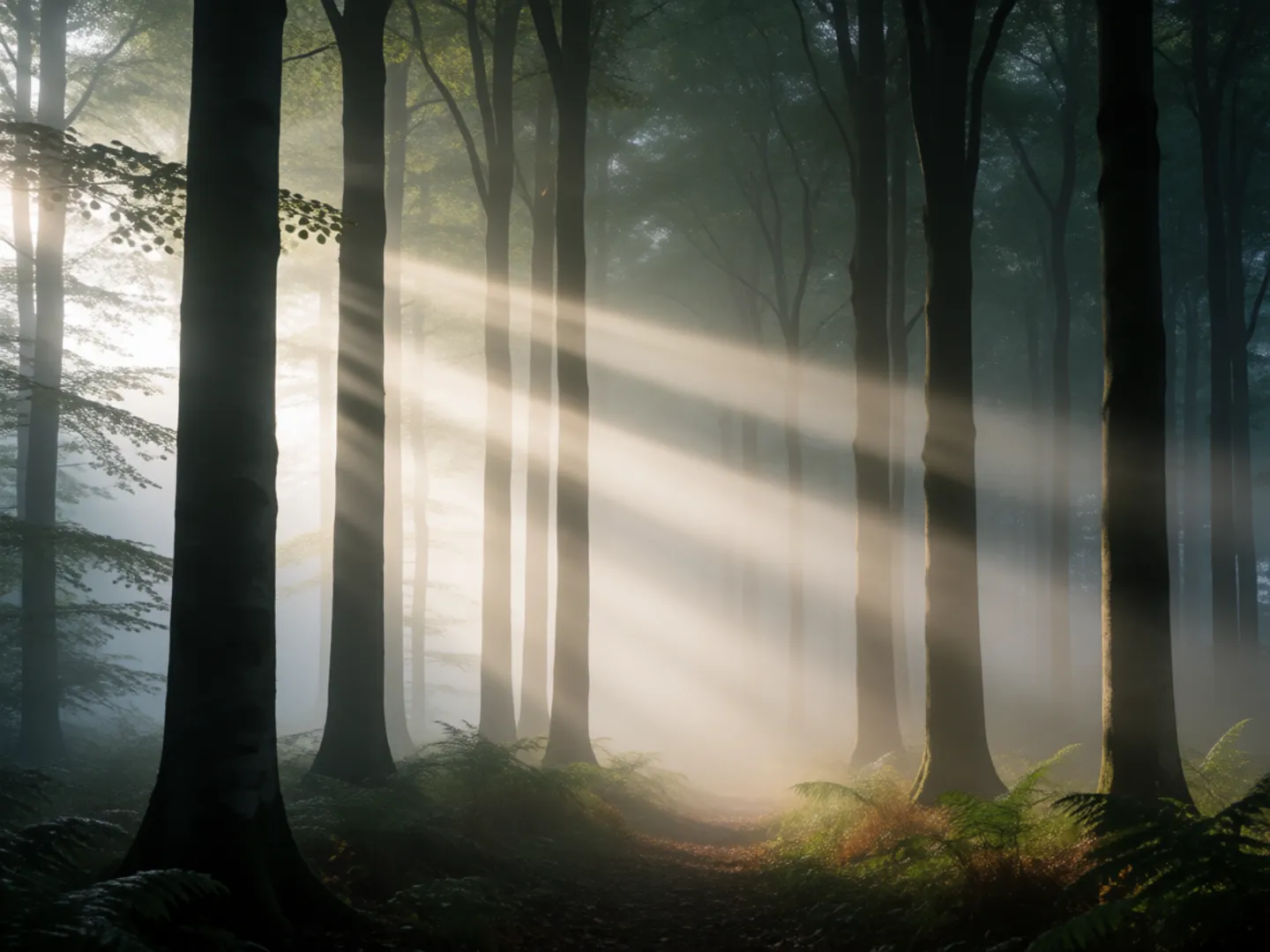
Scientists call them crepuscular rays. They look as if they burst from one point, but physicists and NASA's astronaut photographs show they run almost parallel. The fan is perspective, and the beams only show up because something in the air scatters the light.
Updated
Will I see rays?THE SHORT ANSWER
A sunbeam is really a stripe of lit air
between stripes of shadow.
THE FAN
The rays are nearly parallel from cloud to ground. They seem to meet at the sun for the same reason a long straight road seems to meet at the horizon.
See the numbersTHE BEAMS
Clouds or hills cast the shadows, but NASA notes the light must also be scattered by dust, aerosols, water droplets or air to show the contrast.
Will I see rays?THE TWINS
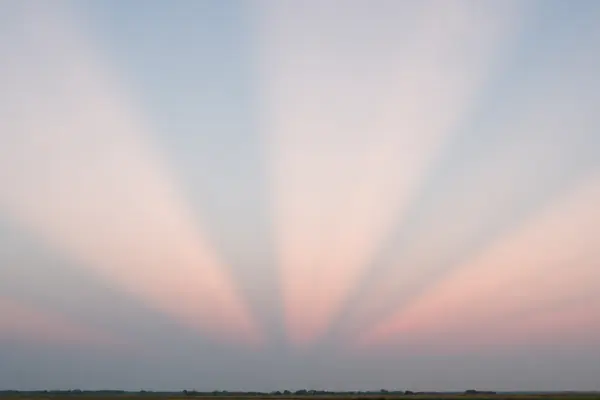
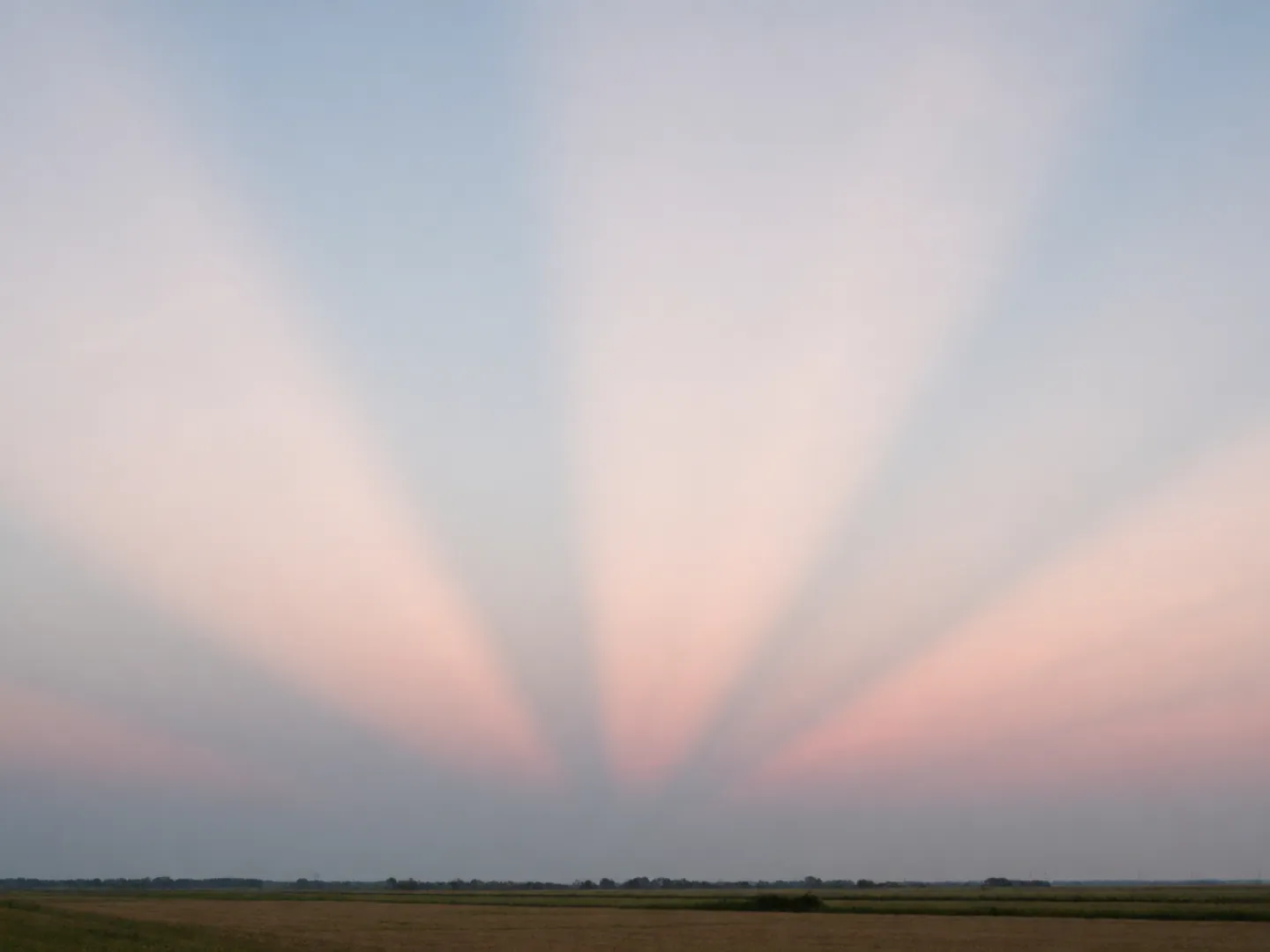
Anticrepuscular rays stretch across the sky and seem to meet again at the point exactly opposite the sun.
How they formA QUICK SKY CHECK
Pick a scene to see how the conditions line up. The bar shows how likely rays are to be visible.
Based on NASA astronaut-photography captions, the University of Illinois Physics Van and the US National Weather Service glossary.
TWO NUMBERS WORTH KNOWING
One figure on where the twin rays meet,
one on how much the beams really spread.
180° from the sun
Where the twin rays appear to meet
The University of Illinois Physics Van explains that anticrepuscular rays appear to converge at a point exactly opposite the sun, which only works because the rays are parallel.
ANTICREPUSCULAR · ILLINOIS
≈ 0°
How far the rays actually fan out
NASA's astronaut photograph over India in 2011, taken from above the rays, gives a clear illustration of their parallel nature. The fan seen from the ground is distance and perspective.
REAL SPREAD · NASA
In a 2020 astronaut photograph over the Arabian Peninsula, NASA notes that dust in the air helped make the sunbeams more clearly visible.
FOUR WAYS TO SPOT SUNBEAMS
These follow from how the rays form: you need gaps, scattering and contrast.
The low sun gives the strongest contrast between bright beams and dark cloud or sky.
Gaps in cloud, or a ridge or tall cloud on the horizon, give the shadows that separate the beams.
Dust, aerosols, mist or water droplets scatter the light so the beams can be seen.
At sunset, check the eastern sky, opposite the sun, for faint anticrepuscular rays converging there.
ANTICREPUSCULAR RAYS
Crepuscular rays do not stop overhead. When the bands of light and shadow cross the whole sky, the far ends appear to come together again at the antisolar point, opposite the sun, just as railway lines appear to meet in both directions.
Why the beams look golden at sunset is a separate effect. At a low sun angle, sunlight passes through much more atmosphere, so Rayleigh scattering removes more blue and leaves the reds and oranges, as the Met Office explains.
Questions
The US National Weather Service defines them as the alternating bands of light and dark, rays and shadows, seen at the Earth's surface when the sun shines through clouds. Crepuscular refers to twilight, when they are most often seen.
It is perspective. The rays are nearly parallel all the way from the clouds to the ground, but like the sides of a long straight road they appear to converge in the distance, here towards the sun.
Clouds or mountain tops cast the shadows, but the light also has to be scattered by airborne dust, aerosols, water droplets or air molecules. That scattering lights up the sunlit bands against the shadowed ones.
They are the same parallel rays seen across the sky, appearing to converge at the point exactly opposite the sun. With a setting sun they can extend from the west all the way across the sky to the eastern horizon.
Yes. The University of Illinois Physics Van notes that crepuscular rays can be seen at any time of day; dawn and dusk simply give more contrast.
Sources
ABOUT THIS NAME
doodlerayz.com is part of the DoodleSale portfolio. It isn't in an auction right now, but you can ask about leasing it.